


This article by Craig A. Evans and Scott Stripling was first published in the Near East Archaeological Society Bulletin 66, (2021).
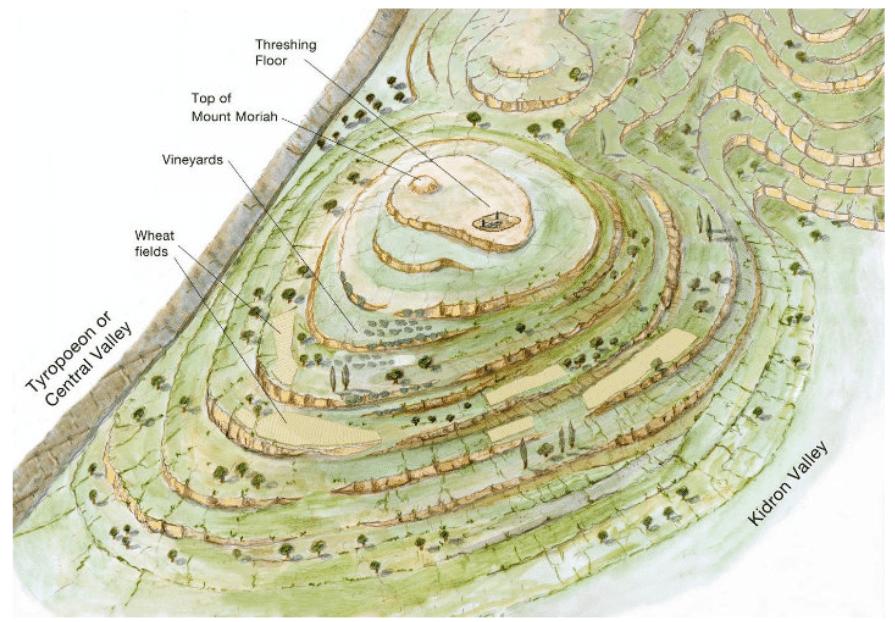
Recently, it has become popular in certain circles to assert that the Jewish Temple(s) did not originally stand atop the historical Temple Mount, known today as Haram esh Sharif, but rather stood on the lower ground to the south in the City of David, covering the Gihon Spring and extending west between the Stepped Stone Structure and the Ophel (Proposal 1 – Martin’s hypothesis) or north of the Stepped Stone Structure and south of the Ophel (Proposal 2 – Cornuke’s hypothesis). Proponents for Proposal 2 insist that the Temple precincts housed a spring, but their schematics show a smaller Temple to the west of the Gihon spring. Advocates for this revisionist view appeal to literature from the Late Classical period, archaeological remains, and biblical passages to support their case. In the discussion that follows we review all the pertinent evidence. This includes (1) Late Classical literature, (2) historical and archaeological evidence, and (3) biblical data.
To read the entire article, open the PDF here.