
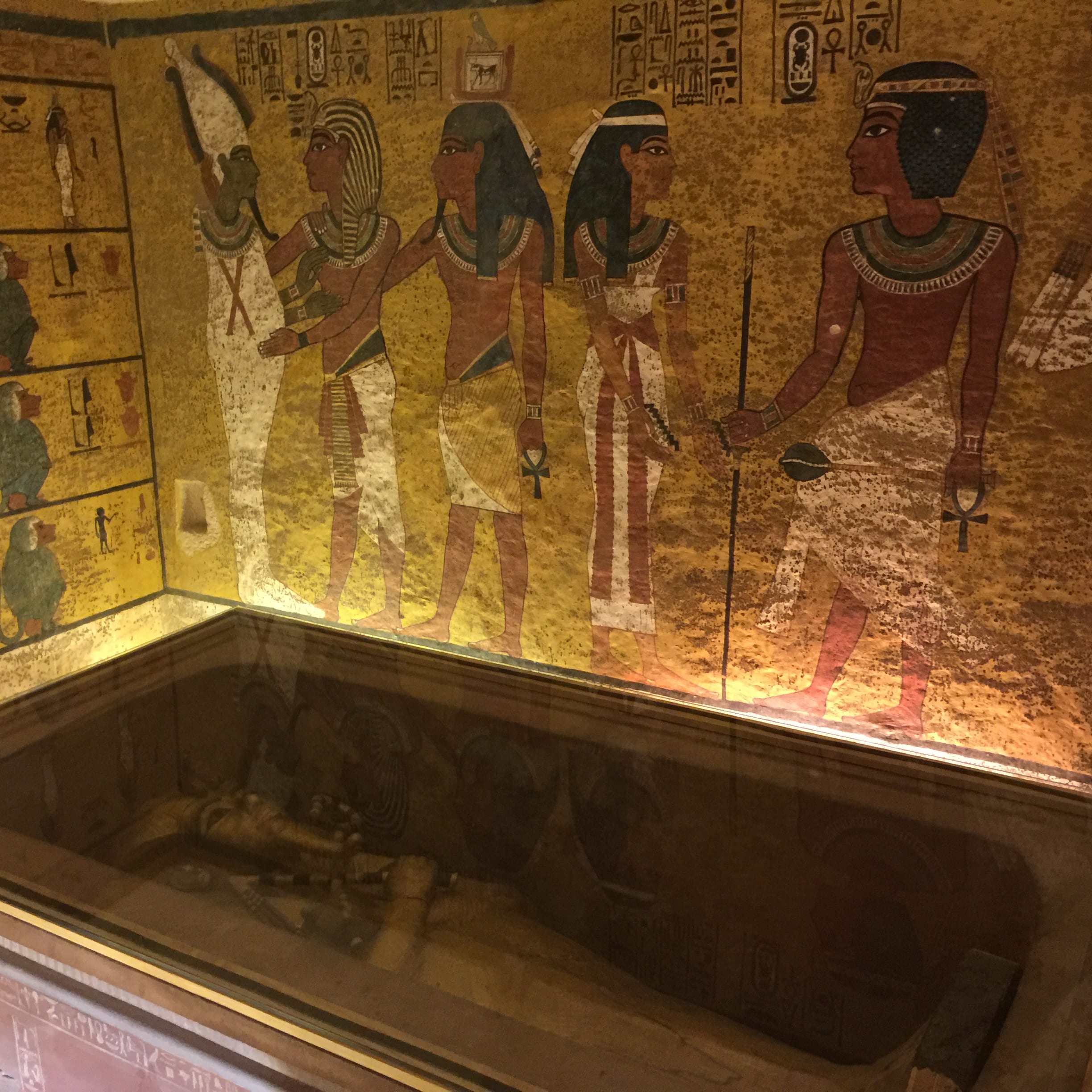


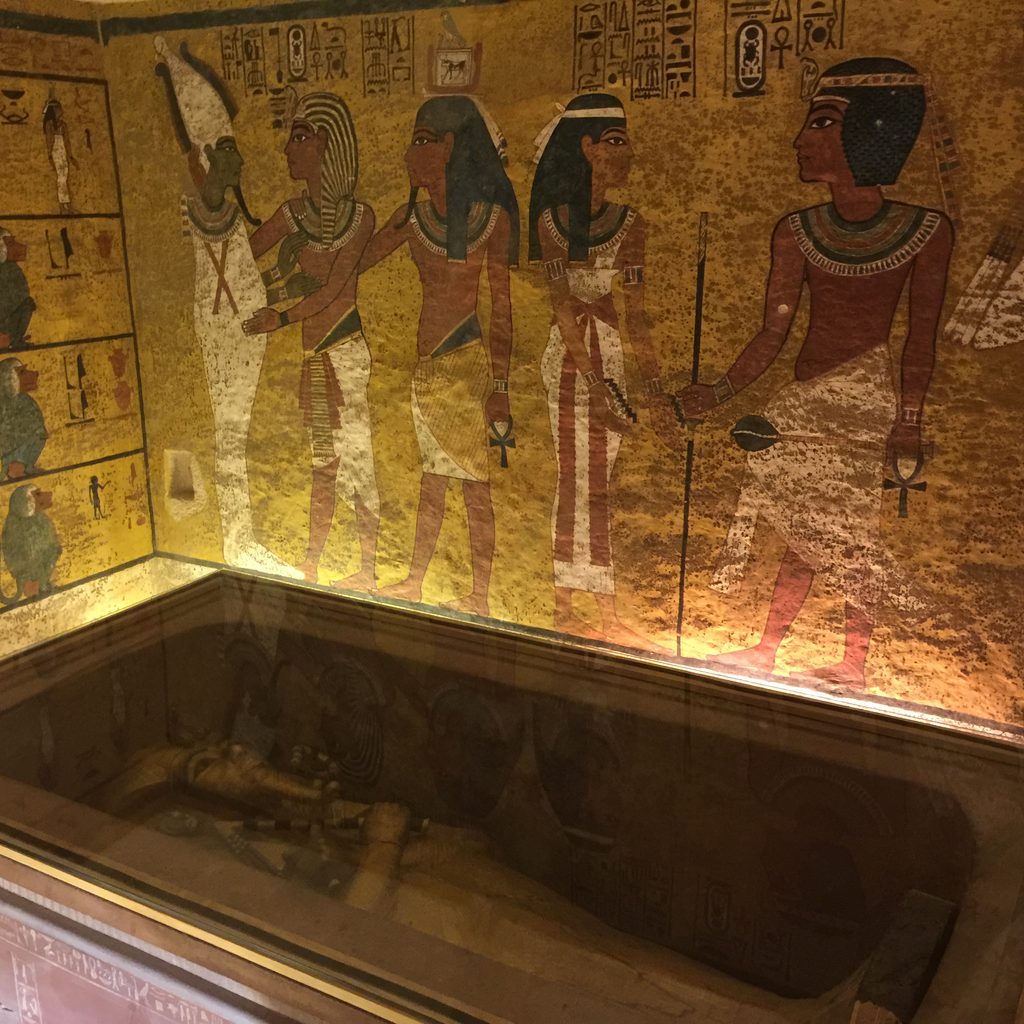
A new study by Mamdouh Eldamaty (Egypt’s former antiquities minister), Abbas Mohamed Abbas, George Ballard, and Nicholas Reeves, reviews a decade of evidence supporting the theory that Tutankhamun’s tomb is part of a larger, hidden complex that may contain Nefertiti’s burial chamber. The report reexamines previously published evidence, including the following:
- King Tut’s tomb (KV62) exits left from the burial chamber, as the tombs of queens do, and not right, as every 18th Dynasty king’s tomb from this period does.
- There is a difference in tomb paintings, with one following a 20-square grid common to the Amarna period, while the other walls were painted later, using the 18-square grid used during Tut’s reign.
- High-resolution photogrammetric scans conducted by Factum Arte revealed evidence of altered cartouches. Traces of Tutankhamun’s name beneath that of Ay suggest that the scene originally depicted Tutankhamun burying his predecessor, rather than Ay burying Tutankhamun.
The report also includes details of recent scans and a microgravity survey, which detected previously unknown right-angled structures running parallel to the tomb’s north wall, along with a two-meter-wide corridor leading away from the burial chamber. Egypt’s Supreme Council of Antiquities is now deciding whether to drill holes 3.15 inches (8 cm) in diameter in the tomb wall to let small, camera-equipped tractors explore what lies behind it. A literal reading of the Bible’s chronological data places King Tutankhamun’s reign during the period of the judges.
Sources:
- https://www.academia.edu/175580520
- https://ancientnow.substack.com/p/the-tomb-behind-tutankhamuns-tomb
Read more BREAKING NEWS articles here: https://biblearchaeology.org/category/breaking-news/