


This article was first published in the Journal of Anthropological and Archaeological Sciences.
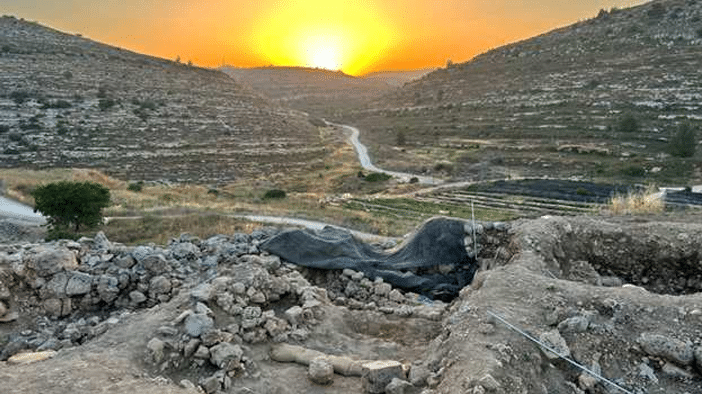
The discovery of a controlled cultic deposit in Area D at Shiloh, near the presumed Tabernacle location, provides a rare archaeological window into early Israelite ritual practice. First excavated by Israel Finkelstein and later by Scott Stripling, the assemblage includes ash layers, approximately 10,000 bones from clean species, cultic vessels, ceramic stands, and eight gold and silver objects. Stratigraphic analysis, ceramic typology, and radiocarbon data place the deposit within the Late Bronze Age II horizon (ca. 1400–1200 BC), aligning with early Israelite occupation. While over forty favissae are known in the southern Levant, most reflect Canaanite or Philistine traditions. The Shiloh assemblage differs in its restricted composition, near absence of iconography, and controlled deposition within a central cultic zone. These features align with biblical prescriptions for the disposal of sanctified materials (Lev. 4:11–12; 6:10–11) and an earlier precedent (Gen. 35). We argue that the Shiloh favissa represents a coherent, in situ expression of early Israelite sacred deposition….
To read the entire article, open the PDF here.